
01
Fiber optic cable installation
Establish the backbone between defined endpoints.
Connect the site. Keep every link traceable.
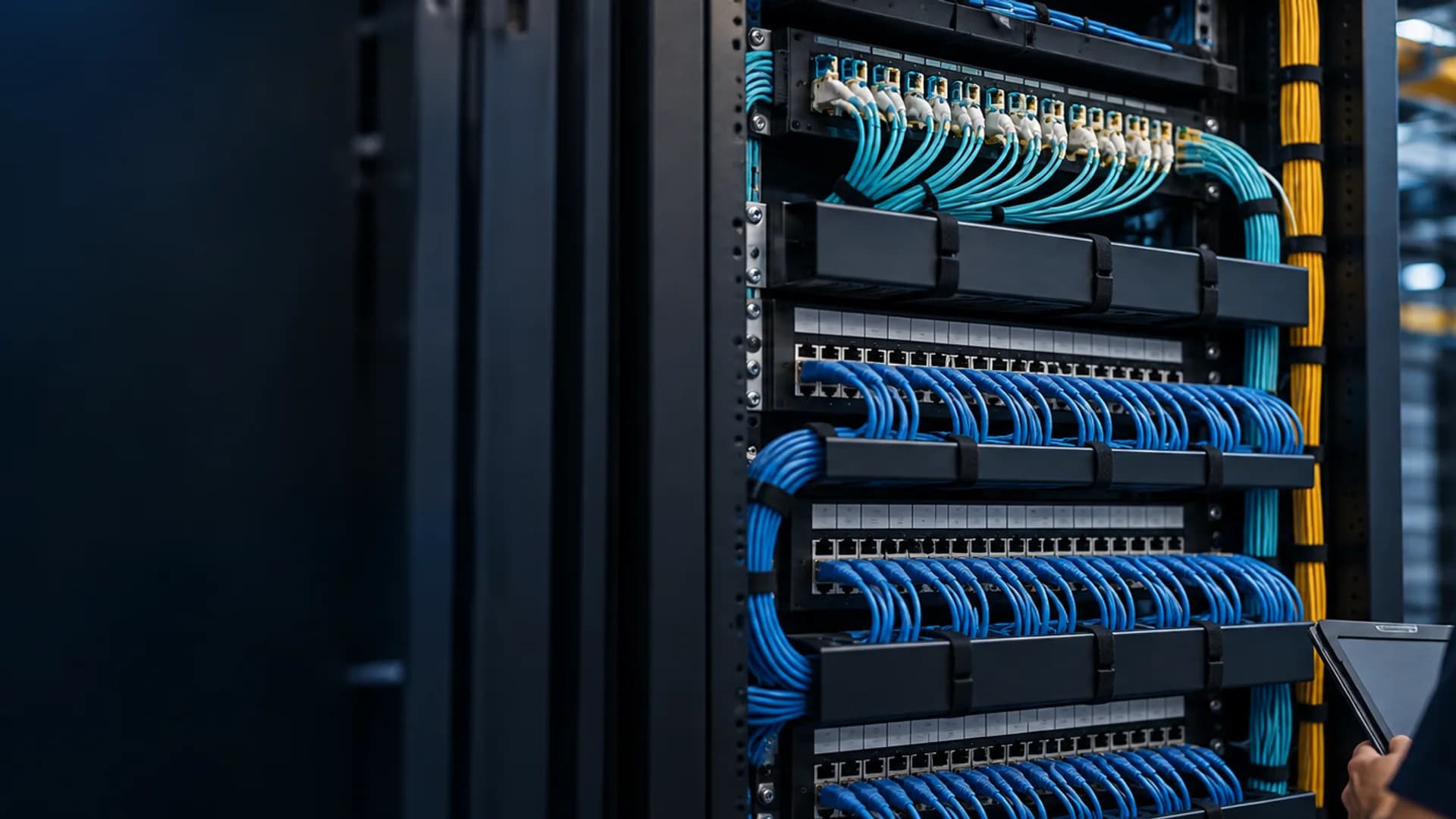
Prepare the physical network for your building, campus or equipment room. Professionals Arabia, based in Riyadh, supports defined fiber optic, UTP and data center cabling requirements across Saudi Arabia, from agreed installation scopes to testing records and handover documentation.
Structured cabling connects work areas, network rooms and equipment through an organized physical network. Fiber can form the backbone between defined locations, while copper UTP links connect specified outlets and equipment points within the agreed design.
A clear scope identifies both ends of each link, the cable and connector requirements, available routes, labels and acceptance checks. We help define these details before installation so the receiving team can identify connections and use the handover records. Active equipment, configuration and service performance are addressed separately when required.
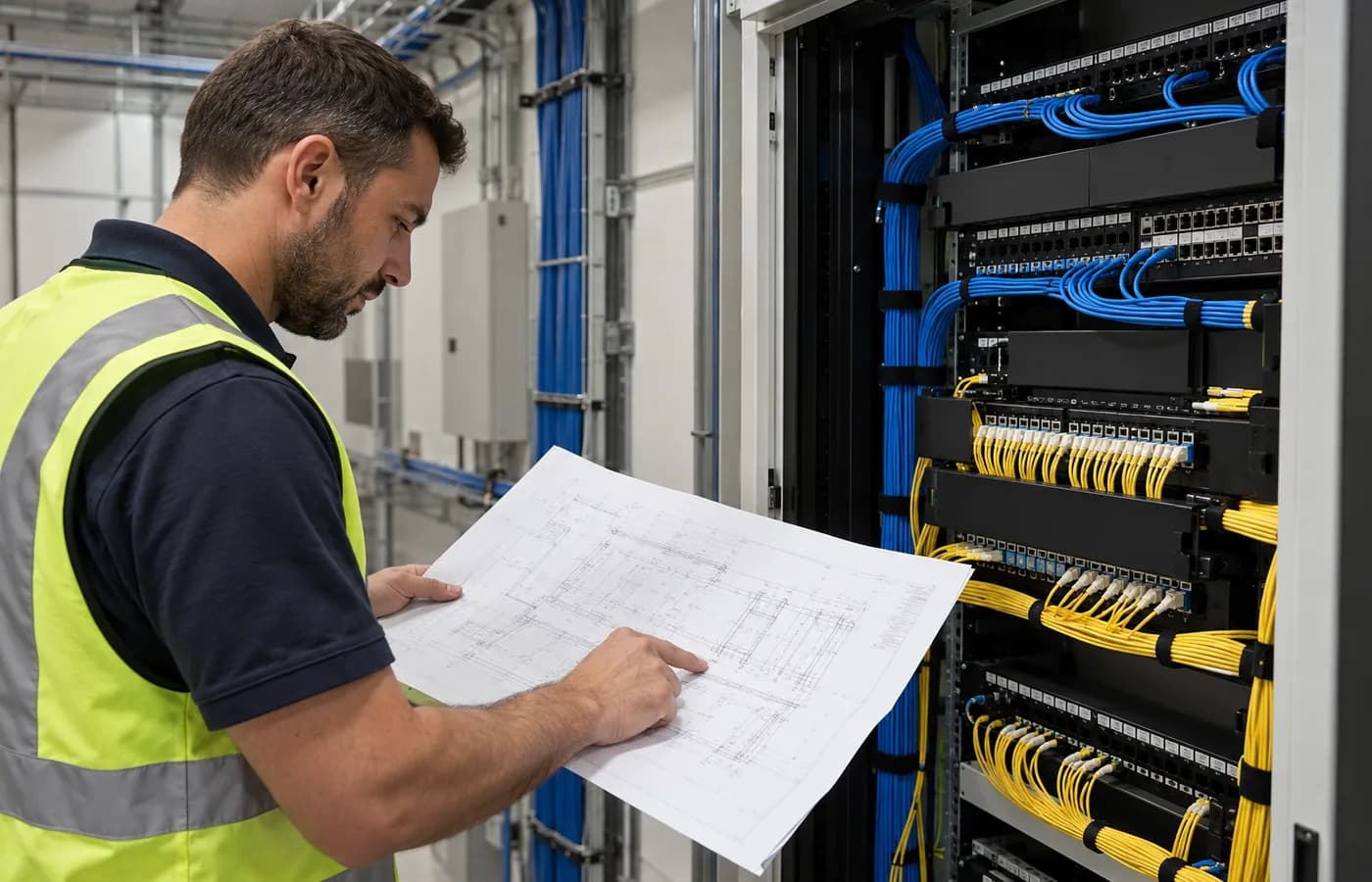
Select a service to see its purpose and typical outputs. Cable specifications, quantities, testing methods and interfaces are agreed for your site.
Establish the backbone between defined endpoints.
Connect fibers with a clear port and core schedule.
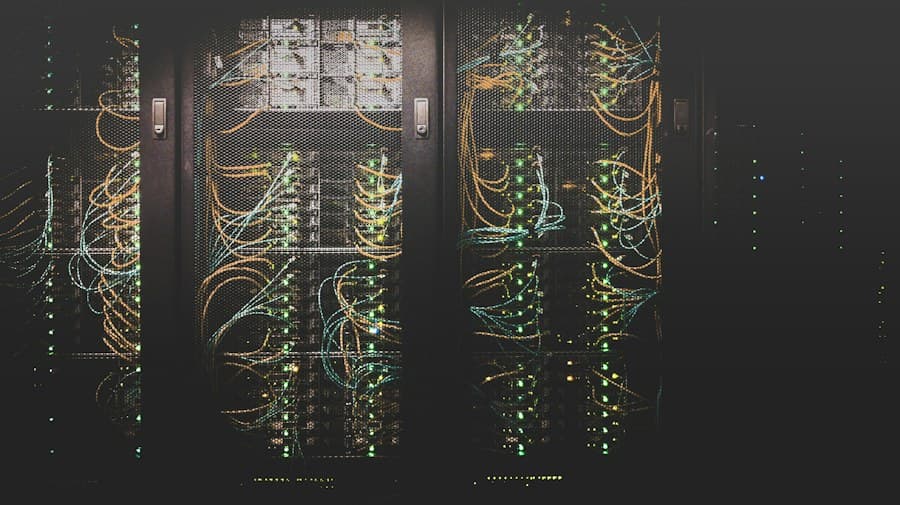
Connect outlets to the agreed distribution point.
Keep patching accessible and organized.
Define the physical connections within the facility.
Link every agreed test result to its connection.
Establish the backbone between defined endpoints.
Prepare the agreed fiber cable installation scope, including route coordination, pulling arrangements, containment interfaces and endpoint identification. Confirm cable construction, fiber type, core count and access conditions before work starts.
Building backbones, campus links and equipment-room connections.
Installed agreed cable sections, endpoint labels and route records.
Scope note: Excavation, duct repair, wayleaves and operator connections require separate inclusion.
Agree the installation and documentation package before work begins. Not every output is part of every assignment.
| Deliverable | What to specify | Format |
|---|---|---|
| Link and port schedules | Define cable IDs, endpoints, fiber allocations, panel ports and outlet numbers. | Agreed spreadsheet or connection schedule. |
| Test records | Define medium, link model, test method, limits and required native files. | Agreed reports and instrument exports where specified. |
| Route and rack information | Define installed-route updates, cabinet identification and panel arrangements. | Marked-up drawings, layouts or agreed records. |
| Handover documents | Define product details, unresolved items and included warranty information. | Agreed digital package and completion record. |
Confirm the design basis, cable and component compatibility, installation requirements and acceptance criteria. Cabling test results do not by themselves establish internet speed, application performance or overall network availability.
The work plan follows the agreed cable specification, route conditions and acceptance requirements.
Confirm pathways, access, endpoint positions and interfaces with other services.
Review cable handling, bend-radius and pulling limits against the specified product requirements.
Apply the agreed outlet, panel, rack and fiber identification scheme.
Match the checks and reporting requirements to the installed links and acceptance scope.
Specific instruments, software, product brands and warranty eligibility are confirmed for the assignment.
Confirm endpoints, quantities, cable requirements and intended use.
Agree routes, responsibilities, labels and acceptance checks.
Complete the defined cabling, termination and management work.
Carry out the agreed tests and record items needing follow-up.
Provide schedules, reports and installation records.
Identify responsibilities between cabling, electrical works, civil routes and active IT equipment.
Agree a labeling and connection scheme before installation.
Establish the tests and handover files the receiving team needs.
Outlet cabling, patching and communications cabinets.
Defined backbone connections between buildings or distribution locations.
Specified communications links coordinated with the installation environment.
Rack-to-rack links and organized passive cabling packages.
Pricing and duration depend on cable lengths, route access, fiber or copper specifications, termination quantities, testing and documentation. Share layouts or a connection schedule for a project-specific assessment.
Discuss your cabling projectSelection depends on the required application, distance, environment and equipment interfaces. Share the layout and equipment requirements so the appropriate cabling scope can be defined.
Extensions can be assessed against the existing cable specification, available routes, panel capacity and connection requirements. Confirm any service interruption and compatibility constraints first.
The proposal should specify the required checks. Optical loss measurements and OTDR records may be requested where appropriate, with the method, wavelengths, limits and reporting requirements agreed beforehand.
Basic continuity checks and performance certification are different scopes. Specify the cable category, link model and required acceptance reports when requesting certification testing.
This page covers passive infrastructure. Active equipment supply, configuration and wireless services require an expressly included technical scope and availability confirmation.
The scope described here covers defined passive cabling and rack-related work. A complete facility requires separate consideration of power, cooling, security, controls and commissioning responsibilities.
Agree the link schedule, port labels, route information and test reports. Native test files, equipment records and warranty documents are included when specified in the proposal.
Share permitted access times, critical links and outage restrictions. The sequence and cutover responsibilities can then be assessed; uninterrupted operation is not assumed.

Define rack power and other facility-service interfaces separately.
Explore service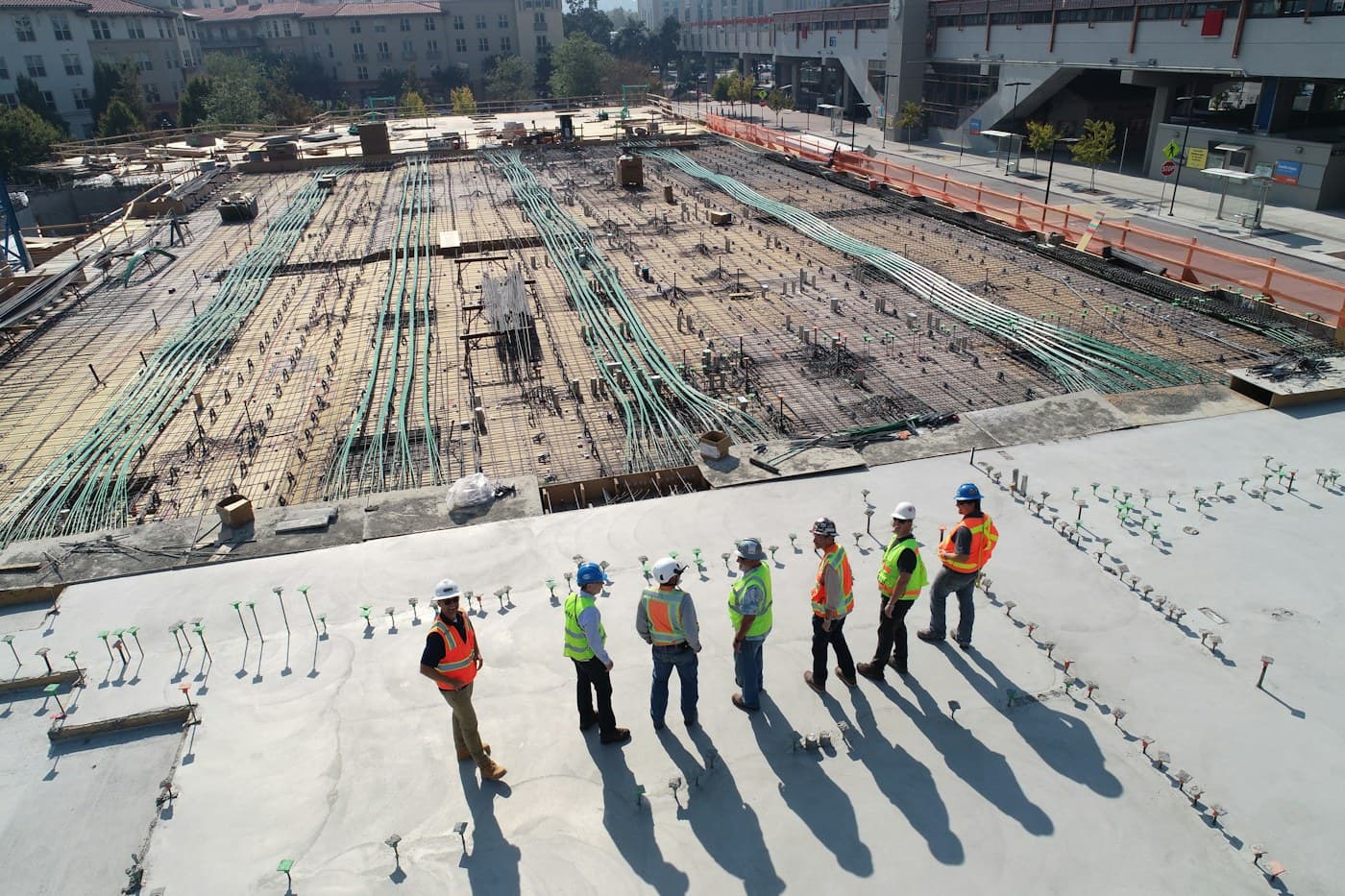
Discuss construction coordination and containment interfaces across disciplines.
Explore service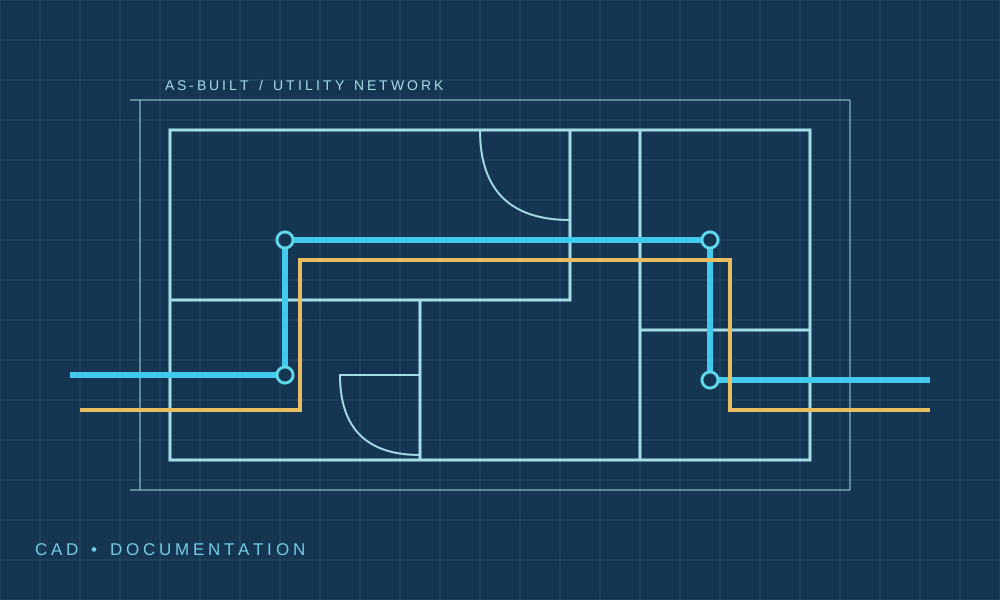
Review buried-service requirements where external cable routes involve ground works.
Explore service
Define route measurement or setting-out requirements where site positions must be established.
Explore serviceShare the site layout, endpoint quantities and available specifications. Our team can discuss the cabling scope, acceptance requirements and next step.
Fiber Optics, UTP and Data Centers
Use of personal information is described in our Privacy Policy.